Why Do Snakes Shed Their Skin? Explained Simply
In this post
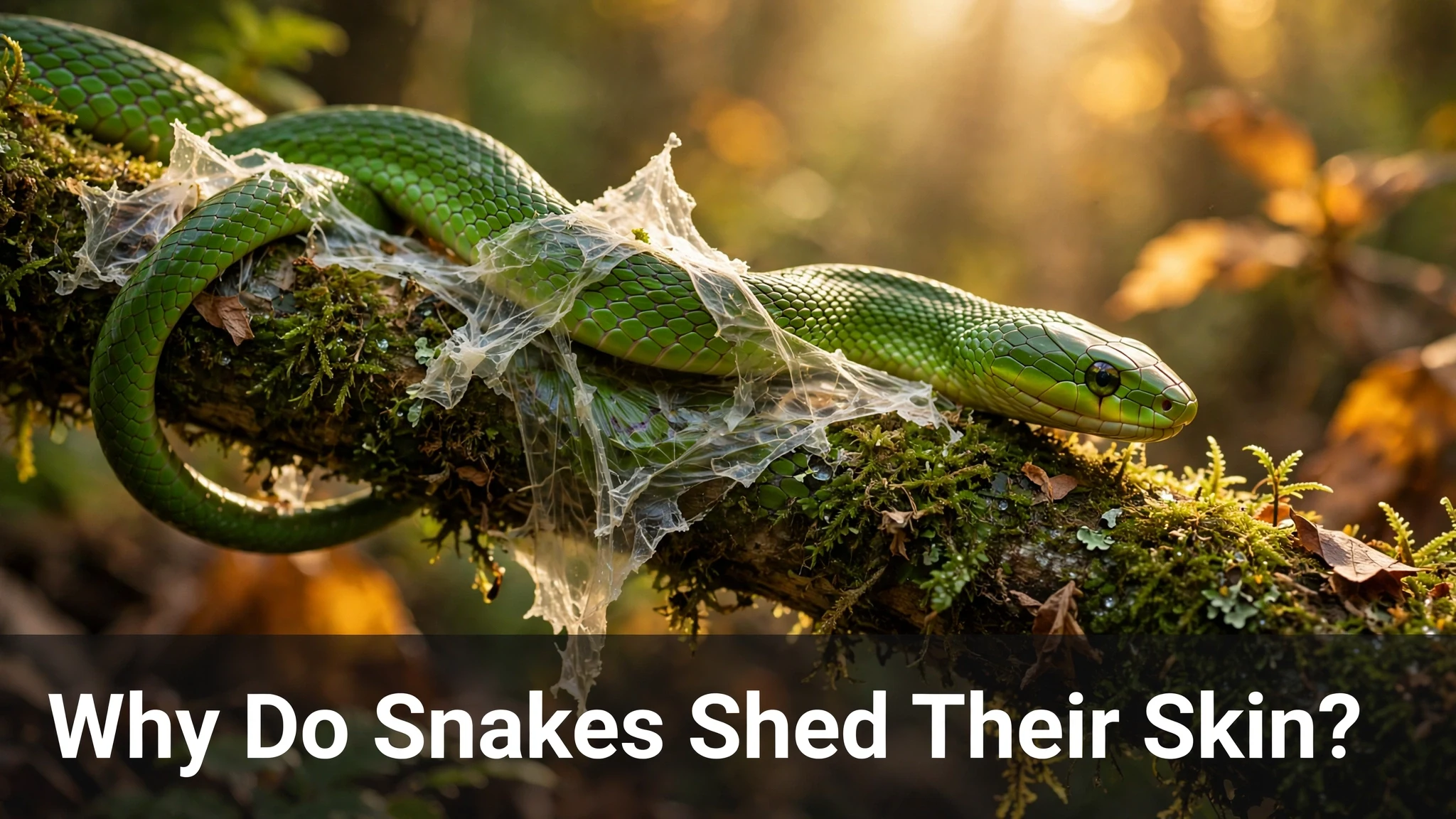
Finding an empty snake skin in a garden is a strange moment. The skin looks like a whole snake, with scales and even the clear cover over the eyes, yet the animal is gone. That empty skin is not a dead snake. It is a coat the snake has outgrown, left behind so it can grow, heal, and stay healthy. Shedding is one of the most visible signs that a snake is alive and growing.
Snakes shed because their skin does not grow with them. Unlike human skin, which stretches and renews itself in small flakes, a snake’s outer skin is a single tough layer that must be replaced whole. This guide explains how often snakes shed, what happens inside their body before a shed, how they slip out of the old skin, and what a healthy shed looks like.
The Short Answer: Skin That Cannot Grow
A snake’s skin is made to protect it, not to stretch, so growth forces a replacement.
In practice, A snake’s outer skin is made of keratin, the same tough material as human fingernails. Keratin is strong and waterproof, which protects the snake from injury and from drying out. But keratin does not stretch much, so as the snake’s body grows, the old skin becomes too tight. So shedding is the price of growing inside a coat that cannot grow with you. A fresh skin waiting under the old one is the whole point of shedding, and once I saw that, the papery shell left on the bark stopped looking like a discarded costume.
Look closer and Under the old skin, a new skin is already forming before the shed begins. A thin layer of fluid builds up between the old and new layers, which helps them separate. That fluid is what makes a snake’s eyes look cloudy or blue just before it sheds. So the snake is not suddenly naked; it has a new coat ready underneath the old one. The shed skin is not a leftover; every scale, eye cap and split seam has a job, and the new layer underneath proves the old one was never just packaging.
The key point is that Young snakes shed more often than adults because they grow faster. A young snake may shed every few weeks, while an adult may shed only a few times a year. The exact frequency depends on the species, the food available, and the temperature. So a shed skin is also a record of growth, and frequent sheds usually mean a young, well-fed snake. Close up, shedding looks less like a party trick and more like a practical repair job, letting a growing animal out of a coat that can no longer stretch.
More Than Growth: Healing and Parasites
Shedding does more than make room. It also repairs damage and removes things that cling to the skin.
What makes this work is that If a snake is injured, shedding can help it heal by replacing damaged scales. The new skin underneath is fresh and unbroken, which closes small wounds. A snake that has been hurt may shed sooner than usual, as if the body is hurrying to repair itself. So shedding is part of the snake’s first aid kit, not just its growth plan. People walk past a shed skin and think of the snake as gone, yet the empty shell tells you the animal grew, healed, and cleared its parasites in one move.
Step back for a moment and Shedding also removes parasites that live on the skin, such as mites. Mites hide under scales and feed on the snake, and shedding can carry many of them away with the old skin. That is why a snake with mites may shed more often, and why keepers watch sheds closely. So the old skin is a way of taking out the rubbish, including unwanted guests. One shed packs growth, healing and a parasite clear-out into a single rough rub against bark, and the snake pays for it with a few blind, hungry days.
The surprising part is that Shedding can also help a snake that has had trouble digesting or that is changing with the seasons. In some species, shedding happens before breeding, as if the snake is preparing a fresh coat for the season. The timing is linked to hormones, temperature, and food, not to a calendar. So a shed is a sign that the snake’s whole body is changing, not only its skin. Follow the new skin from the cloudy eyes to the final slip, and the separate stages line up like steps on a staircase, each one making the next possible.
The Cloudy-Eye Stage
A few days before shedding, a snake’s eyes turn milky blue, and its behaviour changes.
In practice, The fluid between the old and new skin also covers the clear scale over the eye, which is called the spectacle. That fluid makes the eye look cloudy, and the snake’s vision becomes poor for a few days. During this stage, the snake may hide more, eat less, and be more defensive. So a cloudy-eyed snake is not sick; it is a snake that cannot see well and knows it. A fresh skin waiting under the old one is the whole point of shedding, and once I saw that, the papery shell left on the bark stopped looking like a discarded costume.
Look closer and The snake’s skin also looks duller during this stage. The old skin loses its shine as it separates from the new layer underneath. Its colours look faded, as if the snake has been dusted with powder. So dull skin and blue eyes together are the clearest warning that a shed is coming. The shed skin is not a leftover; every scale, eye cap and split seam has a job, and the new layer underneath proves the old one was never just packaging.
The key point is that After a day or two, the eyes clear again, which means the fluid has been absorbed. The shed itself usually happens within a day or two after the eyes clear. That clearing is a good sign, because it means the new skin is ready. So keepers and watchers learn to read the eyes like a clock, counting down to the shed. Close up, shedding looks less like a party trick and more like a practical repair job, letting a growing animal out of a coat that can no longer stretch.
How a Snake Slips Out of Its Skin
Shedding is a whole-body movement, and the snake uses its surroundings to help it.
What makes this work is that The snake starts by rubbing its nose against a rough surface, such as a rock, a branch, or bark. That rubbing breaks the old skin around the mouth and nose, creating a tear. Once the tear starts, the snake can begin to peel the skin back. So the shed begins at the head, and the snake works its way backwards from there. People walk past a shed skin and think of the snake as gone, yet the empty shell tells you the animal grew, healed, and cleared its parasites in one move.
Step back for a moment and The snake then crawls through tight spaces, using rocks, branches, and rough ground to grip the old skin. As it moves forward, the skin rolls back like a sock being pulled off inside out. The snake’s muscles push against the ground, and the old skin stays behind. So shedding is a team effort between the snake and its habitat, and a smooth, bare enclosure makes it harder. One shed packs growth, healing and a parasite clear-out into a single rough rub against bark, and the snake pays for it with a few blind, hungry days.
The surprising part is that A healthy shed usually comes off in one long piece, including the clear eye caps. If the skin comes off in patches, it may mean the air is too dry, the snake is dehydrated, or it is unwell. The tail tip is the last part to come off, and it is the part most often left behind. So a complete shed in one piece is a good sign, and a patchy shed is a warning to check the snake’s health and humidity. Follow the new skin from the cloudy eyes to the final slip, and the separate stages line up like steps on a staircase, each one making the next possible.
What the New Skin Is Like
The skin underneath is bright, soft, and ready for the months ahead.
In practice, Fresh skin has brighter colours and clearer patterns than the old skin. That is because the old skin was worn, scratched, and faded by months of crawling. A newly shed snake looks almost new, as if it has been polished. So shedding is also a way of renewing the snake’s camouflage, which is vital for hunting and hiding. A fresh skin waiting under the old one is the whole point of shedding, and once I saw that, the papery shell left on the bark stopped looking like a discarded costume.
Look closer and The new skin is also more flexible at first, which helps the snake move and feed. It soon hardens into the tough, protective layer the snake needs. The scales on the belly, which grip the ground, are fresh and sharp. So the new coat is not only prettier; it works better, from grip to protection. The shed skin is not a leftover; every scale, eye cap and split seam has a job, and the new layer underneath proves the old one was never just packaging.
The key point is that The shed skin itself is a perfect copy of the snake, including the scale pattern. That is why shed skins are used to identify species, and why they are sometimes kept as records. The skin is thin, light, and almost transparent, yet it held the whole shape of the animal. So the empty skin is a kind of fingerprint, and it tells a story even after the snake has gone. Close up, shedding looks less like a party trick and more like a practical repair job, letting a growing animal out of a coat that can no longer stretch.
How Often Snakes Shed, by Age and Species
There is no single schedule. Shedding depends on growth, food, and the world around the snake.
What makes this work is that Young, fast-growing snakes may shed every four to six weeks. Adults of the same species may shed only two to four times a year. A snake that eats well and lives in warm conditions grows faster, and sheds more often. So shedding frequency is a clue to how fast the snake is growing, and how good its life has been. People walk past a shed skin and think of the snake as gone, yet the empty shell tells you the animal grew, healed, and cleared its parasites in one move.
Step back for a moment and Some species shed more often because they live in water or in rough places. Water snakes and burrowing snakes wear out their skin faster than tree snakes. Species that grow large, such as pythons, may shed more often when young and then slow down. So the schedule is written by the snake’s life, not by a rulebook. One shed packs growth, healing and a parasite clear-out into a single rough rub against bark, and the snake pays for it with a few blind, hungry days.
The surprising part is that In captivity, shedding is one of the first things keepers watch. A regular, complete shed means the temperature, humidity, and food are right. A bad shed means something needs to change, often the humidity or the water supply. So shedding is a health check that the snake performs on itself, in public, several times a year. Follow the new skin from the cloudy eyes to the final slip, and the separate stages line up like steps on a staircase, each one making the next possible.
What to Do If You Find a Shed Skin
A shed skin is harmless, and it can teach you a lot about the snake that left it.
In practice, Do not panic if you find a shed skin in your garden. It means a snake passed through, not that one is living in your house. The skin is dry and empty, and it cannot bite or move. You can pick it up gently, look at the scale pattern, and then leave it or dispose of it. So the skin is a message, not a threat, and it deserves curiosity rather than fear. A fresh skin waiting under the old one is the whole point of shedding, and once I saw that, the papery shell left on the bark stopped looking like a discarded costume.
Look closer and If you keep a pet snake, do not pull the old skin off by hand. Pulling can tear the new skin underneath and cause infection. Instead, check the humidity, provide a rough surface and a damp hide, and let the snake finish the job itself. So the best help is to fix the conditions, not to do the shedding for the snake. The shed skin is not a leftover; every scale, eye cap and split seam has a job, and the new layer underneath proves the old one was never just packaging.
The key point is that If a shed is incomplete, especially around the eyes or the tail tip, get advice from a vet or an experienced keeper. Retained eye caps can cause infection, and a retained tail tip can cut off blood flow. Those problems are treatable if they are caught early. So a bad shed is not a disaster, but it is a reason to pay attention and act quickly. Close up, shedding looks less like a party trick and more like a practical repair job, letting a growing animal out of a coat that can no longer stretch.
My Take:
I used to think shedding was a strange, almost creepy habit. Now I think it is one of the most honest things an animal can do. A snake does not pretend its old coat still fits. It leaves it behind, in one piece, and moves on. There is something clean about that. It does not cling to what no longer works, and it does not hide the change. It just grows, and the evidence is left on the ground for anyone to see.
I think the cloudy-eye stage is the part I respect most. For a few days, the snake cannot see well, so it hides, eats less, and waits. That is a sensible response to a temporary weakness, and it is one I wish people copied more often instead of pushing through. The cloudy-eye stage is what I keep thinking about: a snake that cannot see properly chooses to hide and wait, and that quiet patience says more about survival than any dramatic escape. Shedding is not a fact I can now recite; it is a lens I carry, and I catch myself using it whenever I see an animal, or a person, outgrow something tight.
I also think shedding explains why snakes are so often misunderstood. People see a shed skin and imagine a monster, when the truth is a growing animal doing routine maintenance. If we told that story first, the fear would have less room to grow. For me, the honest test for a snake shedding its skin is simple. If a shedding explanation sounds smart but tells me nothing new, I drop it and look at the skin itself. If an idea about shedding lets me guess what a snake will do next, say hide before the eyes clear, I trust it, and this account kept passing that sort of check. That is the sort of shed-skin detail I would share on a walk, so the next empty skin someone finds feels like evidence of growth rather than a fright.
The idea that shedding removes parasites stayed with me. It turns a strange habit into a practical one, like changing a bandage or washing a wound. It reminds me that nature’s oddest behaviours usually have a plain, useful reason behind them. Learning how shedding really works took me longer than I expected, because every stage, from milky eyes to the final peel, hides a small decision. For me, learning about a snake shedding its skin was not one dramatic moment. A dull scale here, a rub against a rock there, and piece by piece the routine stops looking strange and starts looking like good housekeeping. Questions that sound childish, like why a snake’s eyes go cloudy, no longer feel silly to me, because that one question opens the whole shedding story.
I am struck by how much a snake depends on its surroundings to shed. It needs rough bark, rocks, and tight spaces, which means a bare, smooth place is not enough. That is a good reminder that animals need a whole habitat, not just food and water, and that small details matter. To a friend curious about snakes, I would say start with the skin itself, and do not settle for the first explanation you hear. Ask what dry air does to a shed, who benefits when parasites are left behind, and what a blind few days cost, and the routine gains a price tag. What I believed about shedding before was loud and simple, and what replaced it arrived without fuss, which is usually how lasting changes in my thinking happen.
If I found a shed skin now, I would look at it differently. I would check the scale pattern, see if the eye caps were there, and wonder how big the snake was. That curiosity feels better than fear, and it costs nothing to practise. Learning about shedding has made me slower to judge, because an animal I once called creepy turns out to be doing careful, necessary maintenance. The more I read about new skin and old skin, the less comfortable I feel with quick verdicts, and I am glad of that discomfort. Looking twice at a shed skin pays off, because the first glance sees a monster and the second sees growth. I would rather hold on to one clear image, a snake slipping out of its own skin like a sock, than memorise ten shedding facts I will forget by spring.
The lesson I take from shedding is about letting go. A snake does not keep a tight old skin because it is familiar. It leaves it behind because growth demands it. I think we all carry old skins of our own, habits and ideas that no longer fit, and shedding them is harder for us than it is for a snake. If I could carry a single shedding idea with me, it would be the cloudy-eye wait, because it shows me how to pause when I cannot see clearly. When I tried to explain shedding without copying the guide, the gaps showed up fast, above all in how often young snakes shed compared with old ones.
Re-reading the opening section about skin that cannot grow, I saw how a single limit, a coat that stretches not at all, shapes the whole shedding story. The striking headline about snakes is not what taught me most; the steady, unglamorous work of the new skin forming underneath did. That steady work reassures me, because growth here is not a spectacle but a routine, and routines are things an ordinary watcher can learn to spot.
The healing and parasites section changed how I talk about snakes, because it gave me a practical reason to mention instead of a scary story. Now I start by asking why a snake would shed at all, then I describe the parasite clear-out, and only then do I say what I think it means. That way of talking feels more respectful to the listener, because they can follow the evidence from the shed skin to the conclusion themselves. It also gives the other person room to disagree, and a conversation about snakes that allows disagreement is far more interesting than a lecture.
Thinking about the cloudy-eye stage one last time, I saw a connection across the whole piece that I had not noticed while I was reading it. Waiting in hiding, rubbing against bark, and slipping out of the old skin all taught the same lesson: watch first, decide later, and be ready to be wrong. Those habits reach beyond snakes into ordinary life, so I will keep this piece and read it again on a quieter day. I will look at the next shed skin I find with fresh eyes, expecting it to tell me something the last one did not.
Frequently Asked Questions
How often do snakes shed their skin?
Young snakes may shed every few weeks because they grow fast, while adults usually shed a few times a year. The exact rate depends on species, food, temperature, and growth.
Why do a snake’s eyes turn blue before shedding?
Fluid builds up between the old and new skin, including over the clear scale that covers the eye. That fluid makes the eye look cloudy or blue, and the snake’s vision is poor for a few days.
Do snakes eat while they are shedding?
Usually they eat less or stop eating during shedding, especially in the cloudy-eye stage. Their vision is poor and they feel vulnerable, so they hide and wait until the shed is done.
Is it safe to touch a shed snake skin?
Yes, a shed skin is dry, empty, and harmless. You can pick it up gently to look at the scale pattern, then wash your hands afterwards, as you would after handling anything found outdoors.
What does a bad shed mean?
A shed that comes off in patches, or leaves skin on the eyes or tail tip, can mean low humidity, dehydration, or illness. It is a sign to check the snake’s conditions and, if needed, ask a vet or experienced keeper.
Can I help a snake shed by pulling the skin off?
No, never pull a shedding snake’s skin off. Pulling can tear the new skin underneath and cause infection. Provide humidity, water, and rough surfaces, and let the snake finish the shed itself.