Winter Storm Preparedness at Home 2026
In this post
- Heating, Insulation and Staying Warm Without Power
- Power Cuts: Light, Communication and Food Safety
- Pipes, Roofs and Protecting the Home Structure
- Emergency Kit, Neighbours and Travel Decisions
- After the Storm: Checking Damage and Helping Recovery
- Preparing Children, Pets and Vulnerable Family Members
- My Take:
A winter storm rarely arrives as a surprise, yet many homes are caught unprepared because preparation was left until the forecast turned red. Preparing at home is not about panic buying. It is about a short list of systems checked in advance: heat, light, food, water, communication, and safety. When those systems are ready, a storm becomes an inconvenience — cold, dark, and boring — rather than a crisis. When they are not ready, a simple power cut can quickly become cold rooms, burst pipes, and a dangerous dash to a shop in snow.
Start before winter, not before a storm. The best time to prepare is a calm autumn weekend, when shops are stocked, tradespeople are available, and you can think clearly. Check heating, insulation, and pipes then. Stock basic supplies gradually, a few items each shopping trip, so the cost is spread and the cupboard fills without a rush. Write a one-page household plan: who does what, where supplies are kept, how you will stay warm if power fails, and who to contact for help. Share that plan with everyone in the home, including older children, so no one has to guess during a storm.
Know your local risks. Some areas face heavy snow and blocked roads, others face ice storms that bring down power lines, and coastal areas may face storm surges or flooding as well. Local weather services, emergency agencies, and utility companies give area-specific warnings and advice, and their guidance should take priority over general articles like this one. Sign up for local alerts if available, know the warning levels used in your area, and understand what each level means for travel and safety. A household plan that fits your actual risks is worth far more than a generic list copied from another climate.
Heating, Insulation and Staying Warm Without Power
Heating is the first system to protect. Service boilers, furnaces, and heaters before winter as makers and local guidance recommend, and check that thermostats, timers, and radiators work. Bleed radiators if they have cold spots, and keep vents and flues clear. Insulation — loft insulation, draught excluders, curtains, and sealed gaps around doors and windows — keeps heat in and reduces the speed at which a home cools during a power cut. Even simple steps, such as closing curtains at dusk, keeping internal doors shut, and placing a rolled towel at a draughty door, help a home hold warmth longer.
If power fails, one warm room is easier to maintain than a whole house. Choose a small, interior room in advance, ideally one with few windows and no draughts, and gather blankets, sleeping bags, warm clothing, and a safe light source there. Dress in layers, wear a hat indoors if cold, and use blankets over legs and shoulders. Keep moving gently — walking around the room, stretching, or doing light chores — because movement generates body heat. Avoid over-exertion, especially for older adults or people with heart conditions, and seek medical advice if chest pain, breathlessness, or other worrying symptoms occur. This is general information, not medical advice.
Never use unsafe heating methods indoors. Do not use outdoor heaters, barbecues, or camping stoves inside, and do not run a car engine in a closed garage, because of carbon monoxide risk. Carbon monoxide is colourless and odourless, and it can kill. Fit carbon monoxide alarms where recommended, test them regularly, and know the symptoms of poisoning, which can include headache, dizziness, nausea, and confusion. If an alarm sounds or symptoms appear, get fresh air immediately and call emergency services. Generators, if used, must be placed outdoors, away from windows and doors, and operated exactly as the maker directs. A warm room is not worth a carbon monoxide risk.
Power Cuts: Light, Communication and Food Safety
A power cut plan starts with light and communication. Keep torches, not just candles, as the main light source, because candles cause fires, especially in a home with children, pets, or tired adults. If candles are used, keep them away from curtains and paper, in stable holders, and never leave them unattended. Keep phone chargers, a portable battery pack, and a battery or wind-up radio ready, so you can receive updates even if mobile networks are strained. Charge phones and battery packs before a forecast storm, and conserve phone battery by lowering brightness and limiting non-essential use during an outage.
Food safety during a power cut needs a plan. A fridge keeps food cold for a limited time if the door stays shut — often a few hours — and a full freezer lasts longer than a half-empty one. Keep the doors closed, do not test food by tasting it, and discard perishable food that has been above safe temperatures for too long, following local food safety guidance. Stock foods that need no cooking and no refrigeration: bread, crackers, tinned food, dried fruit, nuts, and long-life milk, with allergy needs checked. Keep a manual can opener, because an electric one is useless without power. If you rely on electric cooking, keep a safe alternative in mind, such as food that can be eaten cold, rather than improvising with unsafe indoor cooking.
Water and sanitation also need thought. In most homes, tap water continues during a power cut, but in some areas pumps may fail, so storing a small supply of drinking water is wise. Keep a few litres per person per day for at least a couple of days, if storage allows, and rotate the supply. Know where your water stopcock is, in case a pipe bursts, and know how to turn off electricity and gas safely if flooding or damage occurs — but only if it is safe to do so. If you are unsure, call your utility company or emergency services for advice rather than guessing. A little knowledge, learned in calm weather, prevents panic in a storm.
Pipes, Roofs and Protecting the Home Structure
Frozen and burst pipes are one of the most expensive winter storm problems, and they are often preventable. Pipes in unheated areas — lofts, garages, and outside walls — are most at risk. Insulate exposed pipes with lagging, keep the heating on at a low, steady level during cold snaps if possible, and let warm air reach pipes by opening cupboard doors under sinks in very cold weather, where safe. Know where the stopcock is and how to turn it off quickly, because shutting off water within minutes of a burst can limit damage enormously. Keep the number of a plumber or your insurer accessible, not just on a phone that may run out of battery.
Before winter, check the roof, gutters, and drains. Clear leaves and debris from gutters so melting snow and rain can drain, and check for loose tiles, cracked flashing, or blocked downpipes. Heavy snow on a roof is a risk in some areas, but climbing onto a snowy roof is dangerous and should not be attempted by householders; if you are concerned about snow loading, seek professional advice. Inside, check for damp patches, draughts, and signs of leaks after storms, because small leaks found early cost far less than hidden damage found months later. Photograph any damage for insurance purposes, and contact your insurer promptly if damage occurs.
Outdoor preparation also matters. Secure or store garden furniture, bins, trampolines, and other items that wind can turn into projectiles. Park cars away from trees and power lines if possible, and keep a snow shovel, grit or salt, and a windscreen scraper accessible, not locked in a frozen shed. Clear paths and steps promptly, but take care: shovelling snow is hard physical work, and people with heart conditions or other medical risks should avoid heavy shovelling and seek advice. Use grit on icy steps, wear shoes with good grip, and take small, steady steps. A fall on ice can cause serious injury, and most falls happen on the first icy morning, when people are in a hurry.
Emergency Kit, Neighbours and Travel Decisions
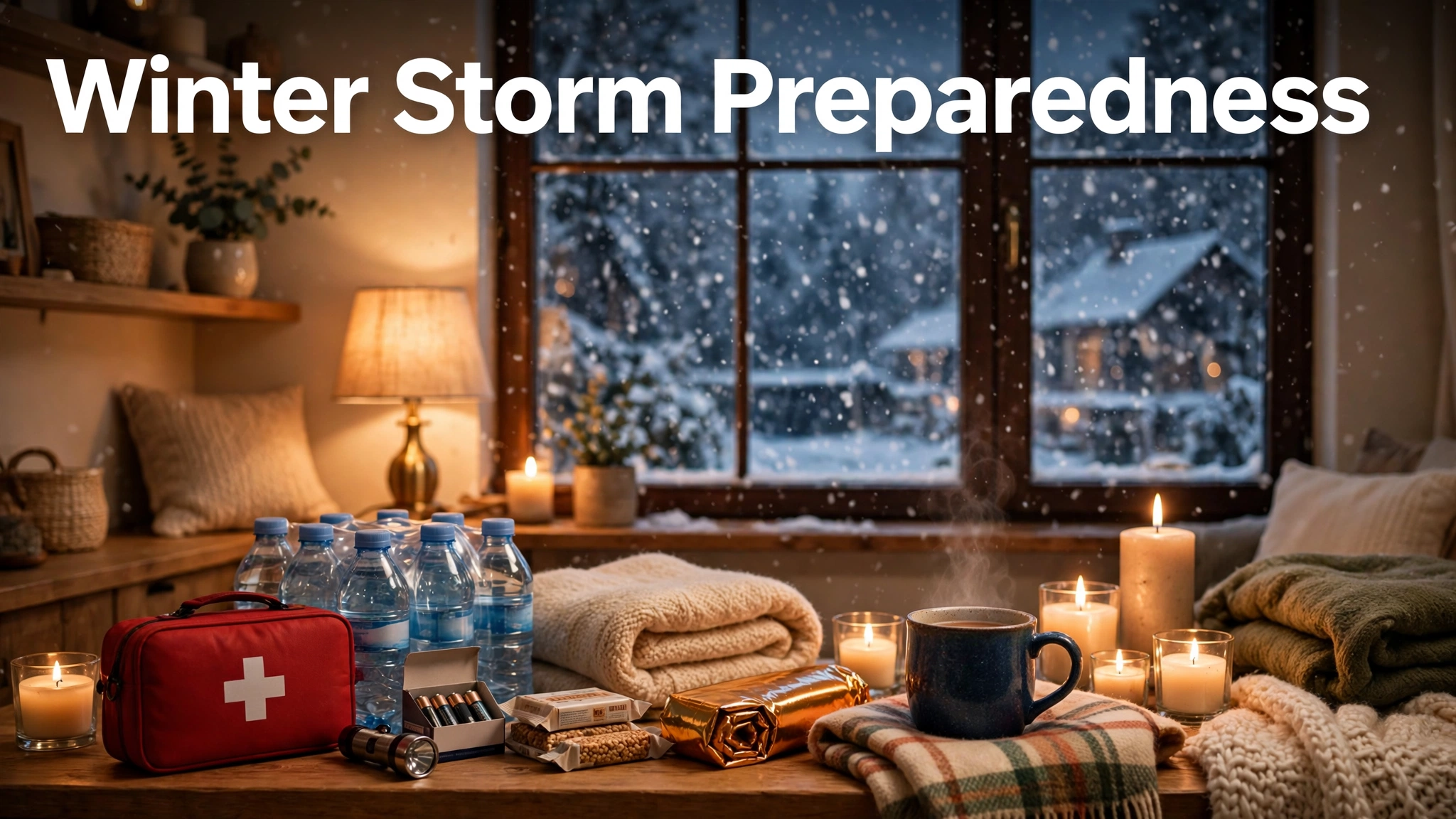
A home emergency kit does not need to be large or expensive. A useful kit includes torches and batteries, a battery radio, a first-aid kit, essential medicines, bottled water, non-perishable food, a manual can opener, warm blankets, spare clothing, basic tools, duct tape, and copies of important documents and phone numbers. Keep the kit in one known place, check it at the start of winter, and replace batteries, medicines, and food before they expire. If anyone in the home uses medical equipment that needs power, talk to your healthcare provider and utility company before winter about backup plans, because this needs a specific plan, not a generic kit.
Neighbours and community are part of preparedness. Check on older neighbours, people living alone, and anyone with mobility or medical needs before and after a storm, if it is safe to do so. A simple phone call or visit can identify a cold home, a power cut, or a need for food or medicine early. Agree in advance with a neighbour or family member who will check on you if you do not respond, and share your plan with someone outside the immediate area, so they can raise the alarm if local communication fails. Community resilience is built from these small, ordinary connections, not just from official services.
Travel during a winter storm should be avoided unless essential. If travel is necessary, check forecasts and road conditions, tell someone your route and expected arrival, and carry a car emergency kit with warm clothing, blankets, food, water, a torch, a shovel, and a charged phone. Keep the fuel tank at least half full in winter, because a delay in snow can become a long wait. If you become stuck, stay with the vehicle in most cases, keep the exhaust clear of snow, and run the engine only briefly for warmth with ventilation, following local emergency guidance. Walking in a blizzard to find help is often more dangerous than waiting. When in doubt, stay home and wait for conditions to improve.
After the Storm: Checking Damage and Helping Recovery
When a storm passes, do not rush outside immediately. Wait until official advice says it is safe, because fallen power lines, weakened trees, and icy surfaces remain dangerous after wind and snow ease. Check your home systematically: look for roof damage, leaks, broken windows, and burst pipes, and photograph damage for insurance before clearing up. Turn off water if a pipe has burst, and contact your insurer and a plumber promptly. If power lines are down, stay well away and report them to your utility company; never touch a fallen line or an object touching it, even if it looks harmless.
Help recovery in your street by checking on neighbours, especially older people and those living alone, and sharing information about open shops, warming centres, or road conditions if you have reliable updates. Clear your own paths and steps carefully, using grit and taking breaks, but do not over-exert yourself after a stressful storm, particularly if you have a heart condition. Restock supplies gradually, replace used batteries and food, and review your plan while the experience is fresh: what worked, what ran out, what was hard to find? A short note on the fridge, updated after each storm, turns one storm’s lessons into next storm’s preparation, without needing to remember everything under stress.
Preparing Children, Pets and Vulnerable Family Members
Children need a storm plan in language they understand. Explain in advance that a storm may mean no power, cold rooms, and staying indoors, and practise the warm-room routine as a game, so it feels familiar rather than frightening. Keep their favourite blankets, books, games, and snacks in the warm room, and give them a small job, such as holding a torch or checking the kit list. Reassure them that adults have a plan, and avoid alarming news coverage that may frighten them. If school closes, have a simple routine for the day — meals, play, reading, and rest — so the day feels structured even without normal activities.
Pets also need preparation. Keep enough pet food, water, and any medicines for several days, and bring outdoor pets indoors during severe cold, following veterinary guidance for the species. Keep pets away from candles, heaters, and de-icing chemicals, which can be toxic if licked from paws. For vulnerable adults — older people, people with disabilities, or people dependent on powered medical equipment — create a specific plan in advance with healthcare providers, carers, and utility companies, including backup power, alternative accommodation if needed, and a contact who will check in. A generic kit is not enough for specific medical needs; a personal plan, written down and shared, is essential.
My Take:
My honest view is that winter storm preparation is mostly about doing boring jobs early, and that is why so many people skip it. Servicing a boiler, lagging a pipe, charging a battery pack, and writing a one-page plan are not exciting, and they do not photograph well. But when a storm hits, those boring jobs are the difference between a cosy, if dull, evening indoors and a cold, stressful night with a burst pipe and a dead phone. I would rather spend one calm autumn weekend on preparation than one storm night regretting that I did not. Preparation is not pessimism; it is the practical way to protect comfort, money, and safety in a season we know will bring cold weather.
I also believe the single warm room idea is underrated. Many people try to heat a whole house during a power cut and fail, then feel cold everywhere. Choosing one small room, closing its doors, gathering blankets and supplies there, and dressing in layers is a far better strategy. It is also a psychological help: a small, warm, lit room with food, water, and a radio feels manageable, while a large, cold, dark house feels overwhelming. Families with children should practise this in advance, as a kind of indoor camping, so that a real power cut feels familiar rather than frightening. A little practice turns a crisis plan into a family routine.
Another point I feel strongly about is carbon monoxide safety, because it is the invisible risk that preparation must address first. Every winter, people are harmed by unsafe heating, blocked flues, and generators used indoors or too close to windows. No amount of warmth is worth that risk. Fit alarms, test them, know the symptoms, and never bring outdoor heaters, barbecues, or car engines into enclosed spaces. If you take one action from this guide today, make it checking your carbon monoxide and smoke alarms. That single check costs minutes and can save lives, and it is the foundation on which all other preparation rests.
I also think neighbours matter as much as supplies. A home can have a perfect emergency kit and still be vulnerable if the person inside is older, alone, or unwell and nobody checks on them. A phone call before a storm, a knock on the door after it, and a shared plan with someone outside the area cost nothing and can catch problems early. Community is not a soft extra in disaster preparation; it is a safety system. In a storm, the most valuable resource is often not a torch or a tin of food, but a neighbour who knows you are there and will notice if you do not answer.
Finally, my view on travel is blunt: stay home unless you truly must go out. So many winter injuries and rescues come from journeys that could have waited a day. Work, shopping, and visits can usually be rearranged, but a car stuck in snow, a fall on ice, or a journey in a blizzard cannot be undone easily. If you must travel, prepare the car, tell someone your plan, and be ready to turn back. A decision to stay home is not a lack of courage; it is good judgement, and good judgement is the heart of winter preparedness. Prepare early, keep one room warm, stay safe from carbon monoxide, look after neighbours, and wait out the storm. That is a plan any home can follow.
I also think after-storm recovery deserves more attention than it usually gets. People rush to clear snow, photograph damage, and return to normal, often while tired and cold, and that rush causes falls, over-exertion, and missed damage. A slower recovery — waiting for official safety advice, checking the home systematically, photographing damage before clearing, and checking on neighbours — protects health and insurance claims alike. Writing down what worked and what ran out, while the memory is fresh, turns a difficult storm into preparation for the next one. That short review, done over a hot drink, is one of the most valuable habits a household can build.
There is also a point about children, pets, and vulnerable family members that I feel strongly about. A generic emergency kit is a start, but it is not a plan for a child who is frightened in the dark, a pet that needs food and warmth, or an older relative who depends on powered medical equipment. Those people need specific, written plans made in calm weather: a warm-room game for children, pet supplies and safe indoor space, and a medical backup plan agreed with healthcare providers. Preparation that includes the most vulnerable members of a household is real preparation. Preparation that forgets them is only a shopping list, and a shopping list will not keep anyone safe on a storm night.
One last thought: preparation is also peace of mind. Knowing your heating works, your pipes are lagged, your kit is in one place, and your neighbours know your plan means that when a storm warning appears, you do not panic or rush to crowded shops. You check your plan, charge your phone, gather in your warm room, and wait it out calmly. That calm is valuable in itself, especially for children and older family members who take their cue from adults. A prepared home is not just warmer and safer; it is calmer, and calm is what allows good decisions during a storm. Do the boring jobs early, and winter storms become weather to endure together, not crises to fear.
To sum up, prepare early, in calm weather, and keep the plan simple enough for everyone in the home to follow. Service heating, lag pipes, charge lights and phones, stock food and water, and know where your stopcock and alarms are. Choose one warm room, stay safe from carbon monoxide, avoid unnecessary travel, and check on neighbours. A storm may still be cold and inconvenient, but a prepared home turns it from a crisis into a story you tell afterwards — preferably over a hot drink, in a warm room, with everyone safe.
Frequently Asked Questions
When should I start preparing my home for a winter storm? Start in autumn, on a calm weekend, before the first severe forecast. Service heating, insulate pipes, stock basic supplies gradually, and write a one-page household plan so preparation is not rushed during a storm warning.
What should be in a home winter storm emergency kit? Torches and batteries, a battery radio, a first-aid kit, essential medicines, bottled water, non-perishable food, a manual can opener, warm blankets, and copies of important numbers. Keep it in one known place and check it at the start of winter.
How can I stay warm at home during a power cut? Use one small, draught-free room, dress in layers, use blankets and sleeping bags, and move gently to generate heat. Never use outdoor heaters, barbecues, or camping stoves indoors because of carbon monoxide risk.
How do I prevent pipes from freezing and bursting? Insulate exposed pipes, keep heating on low during cold snaps if possible, let warm air reach pipes under sinks, and know where your water stopcock is so you can shut off water quickly if a pipe bursts.
Is it safe to travel during a winter storm? Avoid travel unless essential. If you must go, check forecasts and roads, tell someone your route, carry warm clothing, food, water, and a charged phone, and keep fuel at least half full. If stuck, stay with the vehicle in most cases and follow local emergency guidance.
What should I do if my carbon monoxide alarm sounds? Get fresh air immediately, do not re-enter until it is safe, and call emergency services. Know the symptoms — headache, dizziness, nausea, confusion — and never ignore an alarm or assume it is faulty without professional advice.