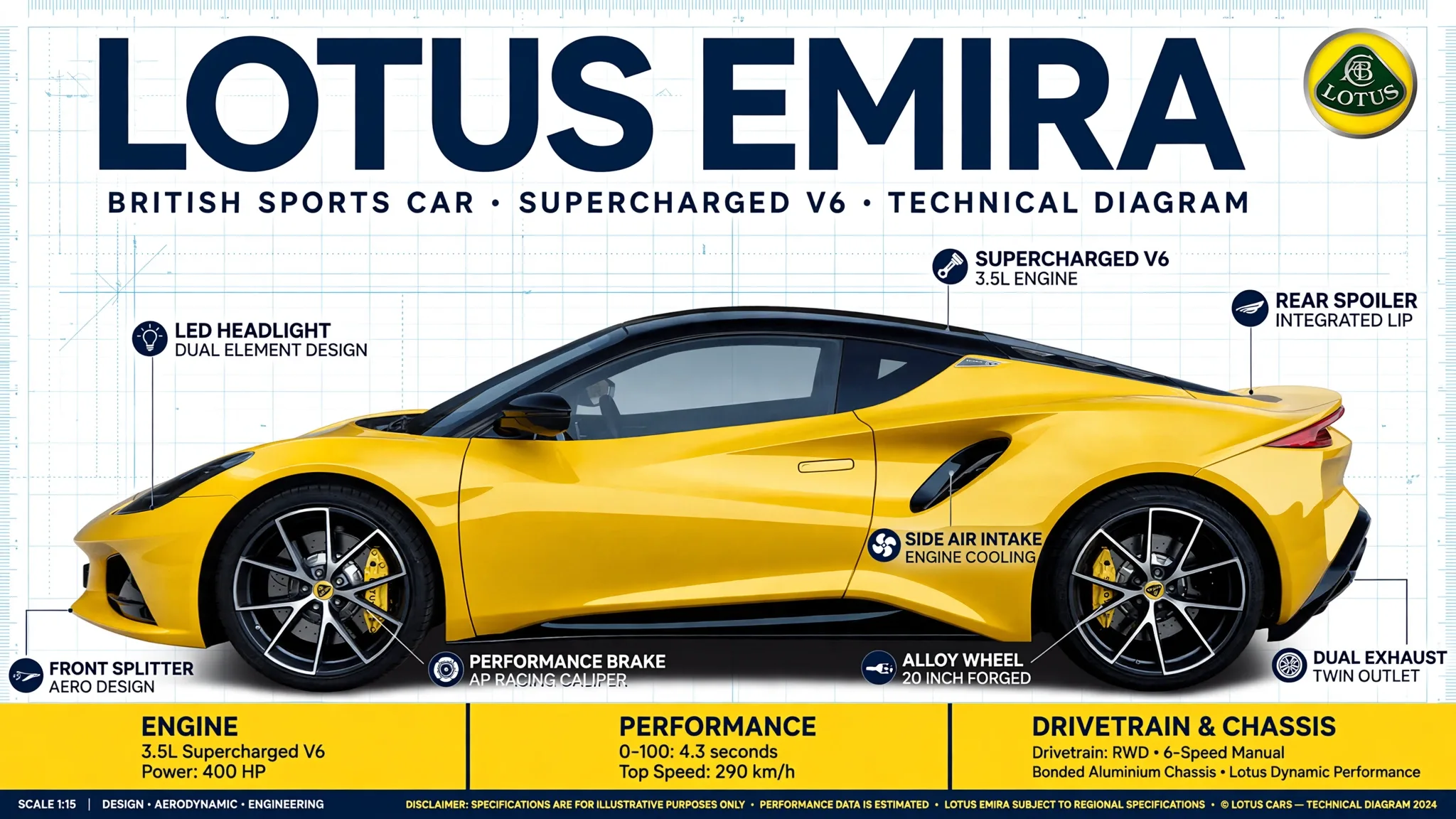
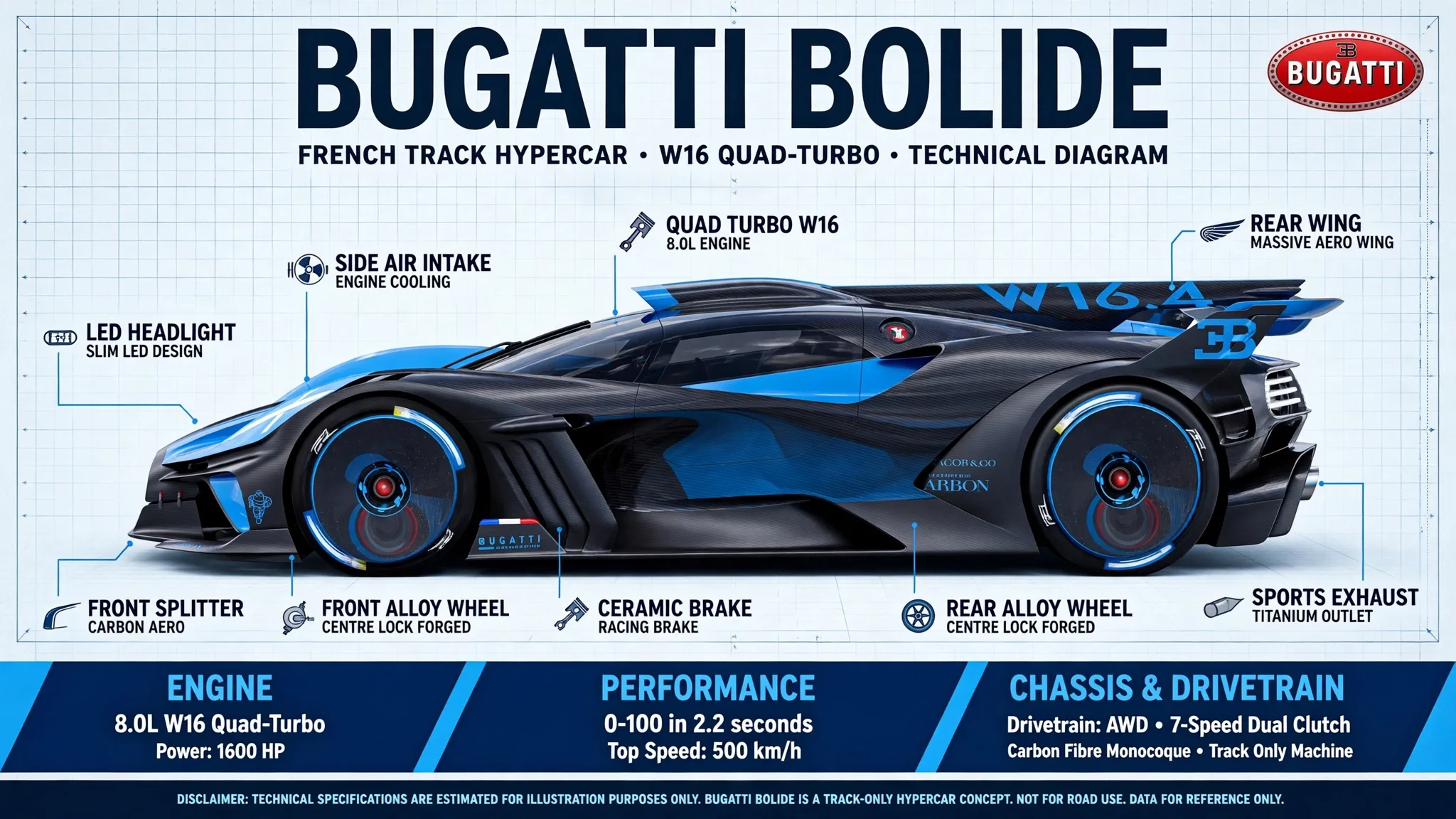
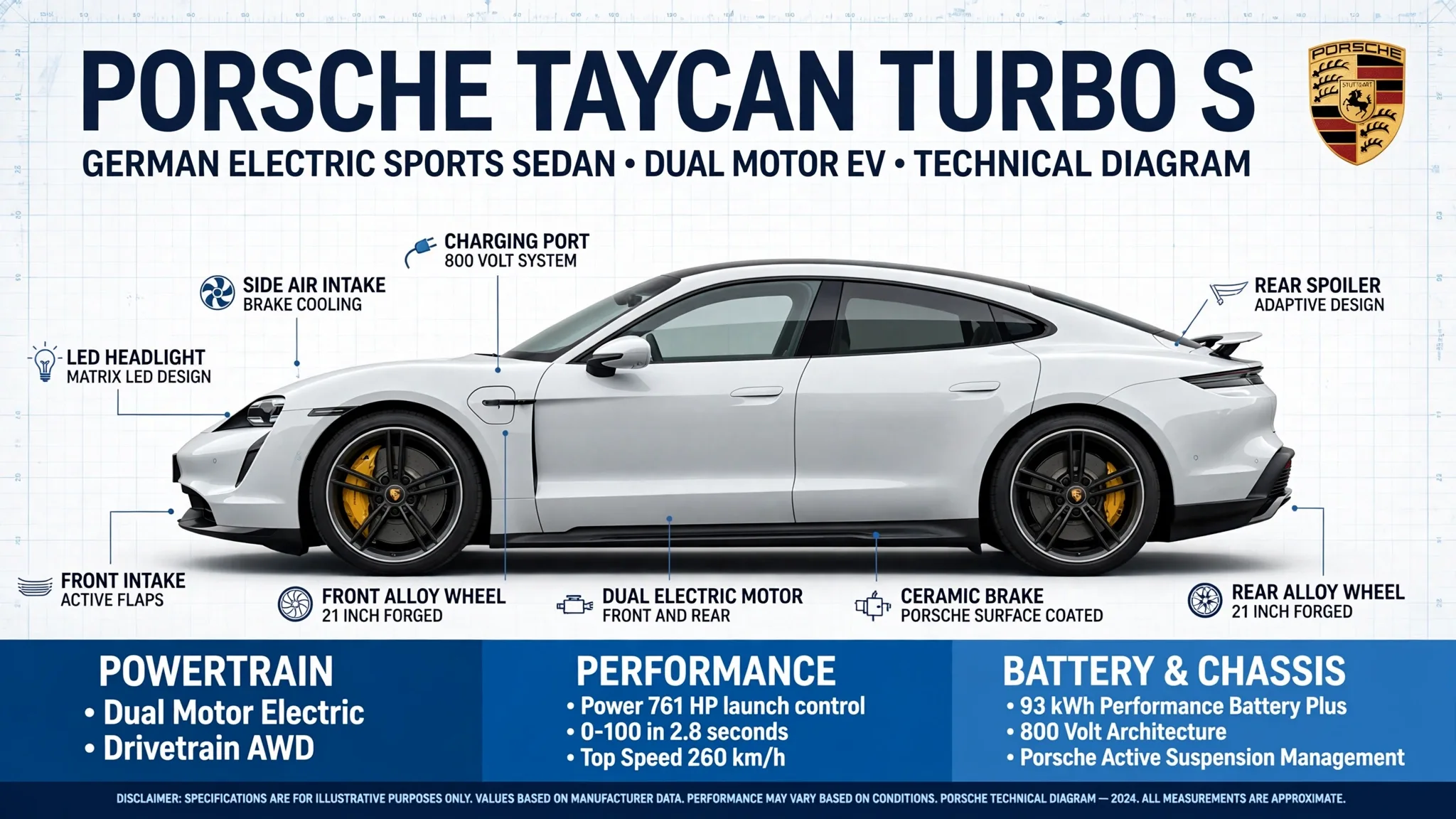
Nissan GT-R Nismo Technical Diagram
In this post
Have you ever heard a car called Godzilla? Not a toy. Not a movie prop. A real car, with four wheels, that people gave a monster’s name because it scared much bigger, much richer rivals on the racetrack. That car is the Nissan GT-R. And the version in our diagram is the sharpest one of all: the GT-R Nismo.
Nismo is short for Nissan Motorsport. It is the team inside Nissan that builds cars for racing. When they touch a GT-R, they do not just add stickers. They tune the engine, stiffen the body, and shape the air around the car. The result is a machine that looks almost ordinary next to a Lamborghini, then beats it where it counts: on the road and on the track.
Why Do People Call It Godzilla?
Nicknames in the car world are usually jokes. This one stuck because it was true. Years ago, when the GT-R’s grandfather raced in Australia, it won so often that rival teams and newspapers started calling it Godzilla. The name followed the car across generations. It means something simple: this car punches far above its size and price.
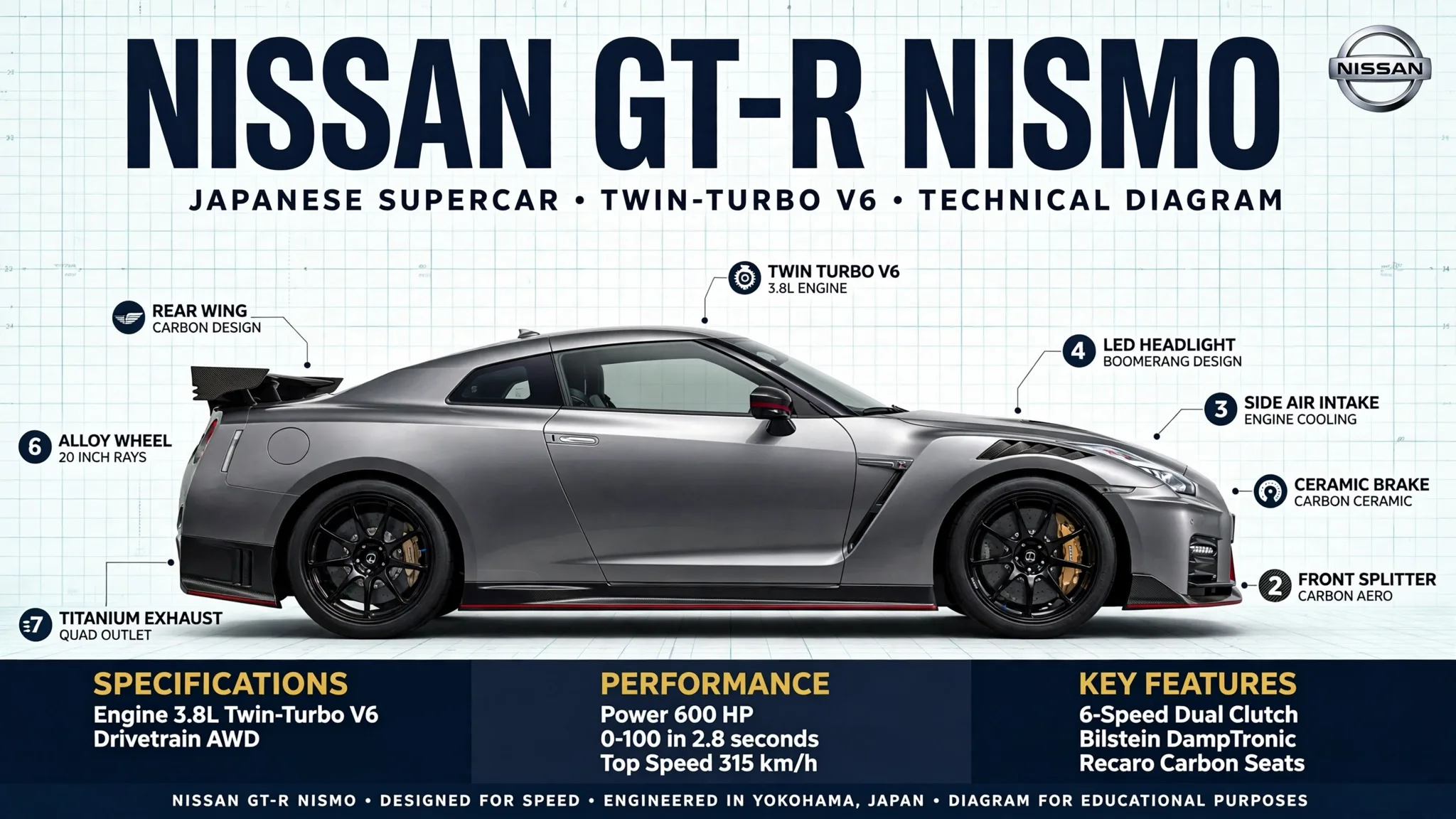
Look at the diagram and you will see why. The GT-R does not try to look like a spaceship. Its shape is chunky, muscular, and honest. Four round tail lights. A big rear wing. Wide fenders that cover wide tyres. Nothing is there only for show. Every line has a job, and most of those jobs involve air. Air must flow over the car smoothly, press it down onto the road, and cool the engine and brakes. The Nismo body kit is shaped by that need, not by fashion.
Under the skin, the story gets even better. Each GT-R engine is put together by hand, by a small team of master builders in Japan. They sign their work. Think about that for a second. In a world of robots and assembly lines, one person still builds your engine from start to finish and puts their name on it. That is rare. That is special. And it tells you how seriously Nissan takes this car.
Two Turbos, One Simple Job
Let us talk about the engine in plain words. The GT-R Nismo uses a 3.8-litre V6 engine with two turbochargers. A turbocharger is a small fan that pushes extra air into the engine. More air means the engine can burn more fuel. More fuel burned means more power. Two turbos mean the push is strong across a wide range of speeds, not just at the very top.
The result is 600 horsepower. That is a huge number. But the GT-R is clever about how it uses that number. It does not save all its power for one wild moment. It spreads it out. Press the accelerator gently, and the car moves smoothly. Press it hard, and the turbos wake up with a push that feels like a wave building behind you. The diagram says 0 to 100 kilometres per hour takes 2.8 seconds. That is supercar territory, no matter how you look at it.
Top speed is 315 kilometres per hour. Again, you will never need that on a public road. But it proves a point. The engine, the gearbox, and the body are all strong enough to hold together at speeds most cars never reach. That strength is what makes the car feel solid and safe at normal speeds too. It is never stressed. It is always ready.
Here is the part many people miss. Power alone does not win races. Control wins races. And control is where the GT-R has always been a genius.
The gearbox deserves a mention too. The GT-R uses a dual-clutch gearbox, which is really two gearboxes working together. While one gear drives the car, the next gear is already waiting. When you change gear, the swap happens in a blink, with almost no pause in power. On a track, that matters. On a normal road, it simply means the car always feels ready, never caught off guard. It is one more reason the car feels so quick, even when you are not driving fast.
Grip You Can Actually Feel
Grip is the word drivers use for how well tyres hold the road. You feel grip every time you turn the steering wheel. Good grip means the car goes where you point it. Bad grip means it slides. The GT-R Nismo is famous for grip, and the reason sits in one word: all-wheel drive.
All-wheel drive means all four wheels push the car, not just two. Imagine trying to push a heavy box with two hands. Now imagine four friends pushing it together. The box moves more steadily, and nobody slips. That is what all-wheel drive does. Each wheel shares the work. On wet roads, on dusty corners, and on fast launches, the car stays planted.
The Nismo adds more tools to that grip. Its suspension is tuned by people who race cars for a living. Its carbon fibre parts make the body lighter and stiffer where it matters. Its rear wing presses the back of the car down as speed rises, so the rear tyres bite harder exactly when they need to. The brakes are large and strong, built to stop this car again and again on a track without fading.
All of this adds up to a feeling that surprises first-time drivers. The GT-R feels heavy when you open the door. It feels solid when you sit down. But the moment you drive it, it feels light on its feet. It turns quickly. It stops quickly. It does what you ask, without drama and without delay.
A Race Car You Can Park at Home
So what is it like to live with a GT-R Nismo? It is not a fragile museum piece. It has four seats, a usable boot, and a cabin you can sit in for hours. You can drive it to work. You can drive it to the mountains on a weekend. You can take it to a track day, push it hard all afternoon, and drive it home again. Few cars with this much speed can say the same.
If I had one evening with this car, I would not chase top speed. I would take it to an empty mountain road, open the windows a little, and listen to the turbos work through the corners. That is where a GT-R shows its true character: not in a straight line, but in the bends, where grip, balance, and courage meet.
The diagram at the top of this post captures that character in one picture. Follow the labels from the front splitter to the rear wing. Each one points to a part that earns its place. Nothing is wasted. Nothing is decoration. That honesty is the heart of the GT-R. It does not ask you to admire it. It asks you to drive it.
Prices vary by market, year, and options, so the honest answer about cost is simple: this is a serious purchase, and it is worth checking current figures from Nissan or a trusted dealer before you dream too hard. What never changes is the idea behind the car. Big power, honest engineering, and grip you can trust.
Common questions
What does GT-R stand for? GT-R stands for Gran Turismo Racing. It is a name Nissan has used for its fastest road cars for decades, and it signals a car built for both the road and the track.
What is Nismo? Nismo is Nissan Motorsport, the racing division of Nissan. A Nismo version of a car gets a tuned engine, sharper suspension, and racing-style body parts.
Why is the GT-R called Godzilla? The nickname came from its racing success years ago, when it beat much more expensive rivals so often that newspapers compared it to the movie monster. The name stuck and fans still use it today.
Is the GT-R good in bad weather? Its all-wheel drive system helps a lot. Because all four wheels share the work, the car holds the road better in rain than a rear-wheel drive supercar. Careful driving still matters most.