PTI March For Imran Khan
In this post
If you have seen the words “PTI long march” on the news this week and felt a little lost, this post is for you. I will explain everything slowly, in simple words, from the very beginning. You do not need to know anything about politics to follow it.
The short version
- A big march started on Sunday, October 4, 2026, from Lakki Marwat in Khyber Pakhtunkhwa (KP).
- It is led by Sohail Afridi, the Chief Minister of KP, and it is organised by the party Pakistan Tehreek-e-Insaf (PTI).
- The main demand is the release of Imran Khan, the founder of PTI, who is in jail.
- The march says it is heading towards Islamabad, but so far it has stayed inside KP.
- Today, October 11, supporters from all over Pakistan have been asked to gather at the Swabi Interchange.
What is a “long march”?
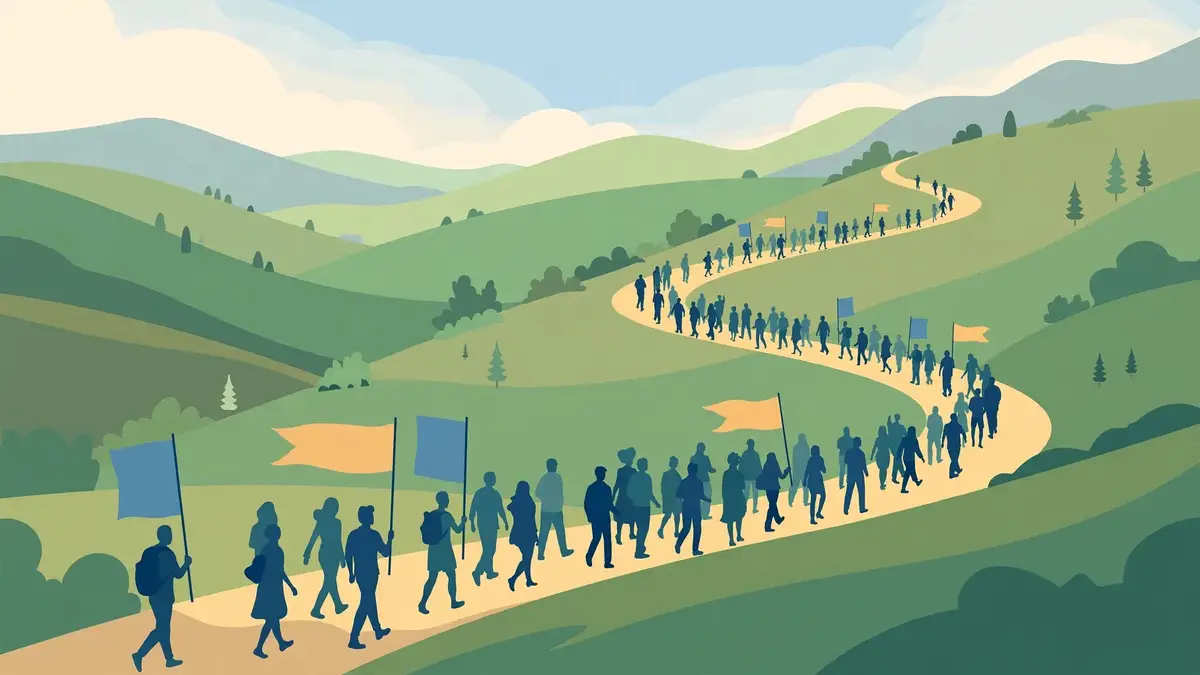
A long march is a very big walk or drive by a large group of people who want to send a message to the government. Instead of staying in one place, they travel from town to town, day after day. In each town, more people join, and the leader makes a speech.
In this march, people are travelling in a long line of cars, buses and trucks, which is called a convoy. The idea is simple: the bigger the crowd, the harder it is for the government to ignore it.
Who is leading it?
The march is led by Muhammad Sohail Afridi. He became the Chief Minister of Khyber Pakhtunkhwa in October 2025.
A Chief Minister is the head of a province’s government, a little like the captain of a team. PTI is the party that runs the government in KP. That is why the march can travel through the province freely: the people in charge of the province are also the people leading the march.
Why are they marching?
According to PTI leaders, there are a few main reasons.
1. They want Imran Khan released. Imran Khan used to be the Prime Minister of Pakistan. He is now in jail, and PTI says he should be freed. This is the demand mentioned most often in the news.
2. They say KP is not getting its fair share of money. Senior PTI leader Asad Qaiser said the federal government is not giving KP what it should get from the NFC Award. The NFC Award is the rule that decides how the country’s tax money is divided between the federal government and the provinces. Think of it like dividing a big cake between family members. PTI says KP is getting a smaller slice than it deserves.
3. They say promises to the tribal areas were not kept. Some years ago, the tribal areas called FATA were merged into KP. Asad Qaiser said the promises made to the people of those areas at that time have not been fulfilled.
4. They do not want another military operation in KP. A military operation is when the army goes into an area to fight against armed groups. Chief Minister Afridi said, while speaking in Khyber district, that he will not allow another military operation in the province. He also said past policies did not stop terrorism.
Please remember that these are the reasons given by PTI leaders. The government sees things differently, and I explain its side below.
Where has the march gone so far?
Here is the journey day by day, so you can picture it on a map.
- Sunday, October 4: The march began at Gandi Chowk in Lakki Marwat. It was first planned for September 27, but the date was moved to October 4.
- Monday, October 5: After staying overnight in Karak, the convoy moved towards Kohat and stayed there for the night.
- Wednesday, October 7: The convoy reached Khyber district. There, the Chief Minister said he would not allow another military operation.
- Thursday, October 8: The convoy entered Peshawar, the capital of KP, on the fifth day of the march.
- Friday, October 9: The march reached Charsadda on its sixth day. Afridi told the crowd it was not just a long march, but the conditions for a revolution.
- Saturday, October 10: The march completed one full week. Afridi spoke to a large crowd at Farooq-i-Azam Chowk in Charsadda, and the plan was to move on to Mardan.
- Sunday, October 11 (today): Supporters have been called to the Swabi Interchange.
What does the government say?
The federal government has not agreed with the march.
- Amir Muqam, a federal minister, said on October 5 that the march would not be allowed to enter Punjab or Islamabad.
- Prime Minister Shehbaz Sharif asked PTI to end the march and solve the problems through talks. He has offered to sit down and talk.
- Before the march began, a PTI team went to Islamabad to talk with the government. The talks did not solve the problem, and the march went ahead.
- There has also been talk of governor’s rule in KP. Governor’s rule means the central government takes over the running of a province for some time. Chief Minister Afridi said he is not scared of this and that his movement is about more than power.
What happens next?
This is the part everybody is waiting for.
- Afridi has said he will announce the next plan at the Swabi Interchange. Earlier reports said this would be on October 11, but the latest reports say it will be on October 13.
- He has also written that the march will move beyond Swabi on October 14, God willing.
- Nobody knows yet where the march will finally stop. Dawn newspaper noted that the final destination still looks undecided. The route and dates have also changed several times, so more changes are possible.
Why does this matter to ordinary people?
KP is a big province with millions of people, and this march is one of the biggest political events in Pakistan right now. It is a sign of the strong disagreement between PTI and the federal government. How it ends, by talks or by more protest, may affect politics across the country for some time.
Big gatherings like this can also affect traffic and daily life in nearby towns. If you live in or travel through Swabi, Mardan, Charsadda or the roads around them, it is a good idea to follow local news updates.
This is a developing story, and details may change. We will keep you updated.
You may also like
My Take: The PTI march tests patience more than street power
The account in this post is careful to present both sides, and the reader should keep that care. The march began on Sunday, 4 October 2026, at Gandi Chowk in Lakki Marwat, led by Khyber Pakhtunkhwa Chief Minister Sohail Afridi and organised by Pakistan Tehreek-e-Insaf. Its main demand, as stated by PTI leaders, is the release of Imran Khan, who is in jail. Other reasons given by PTI leaders are a fairer share of money under the NFC Award, unfulfilled promises to the former tribal areas, and opposition to another military operation in the province. The federal government disagrees: a federal minister said the march would not be allowed to enter Punjab or Islamabad, and the Prime Minister asked PTI to end the march and solve problems through talks. After one week, the march had stayed inside Khyber Pakhtunkhwa, with supporters asked to gather at the Swabi Interchange.
My judgement is that this march tests patience more than it tests street power. A convoy of cars, buses, and trucks, growing town by town, can show strength, and a leader can make a speech in each place. Afridi was to announce the next plan at Swabi, with the latest reports pointing to 13 October, and the march would move beyond Swabi on 14 October. I think the real contest is between a movement that must keep its people together while waiting, and a government that must decide between talks, refusal, and the idea of governor’s rule, which Afridi said he did not fear. Waiting is harder than marching, because marching gives people something to do, while waiting asks them to trust a plan they have not yet heard. Crowds show feeling, but they do not, by themselves, settle money shares, jail releases, or security policy.
What the reader should do differently is refuse to decide this story from a single speech or a single crowd photo. First, check what was actually announced at Swabi, and on which date, because dates in this story have already moved. Second, separate what PTI leaders say they want from what the federal government says it will allow, and hold both statements side by side without merging them. Third, watch the ordinary effect: roads, towns, and daily life near Swabi, Mardan, and Charsadda, not only the leaders, since big gatherings can affect traffic and daily life in nearby towns. If talks resume and produce movement, PTI gains a path marching alone could not give, and the government gains calm without confrontation. If the march pushes forward and is stopped, PTI may gain sympathy but lose momentum, while the government may gain control of the road but lose goodwill. My call is that the wiser first step for either side is a clear, public offer of talks with a date attached, because an offer without a date is easy to ignore, and a march without a next plan is easy to tire out.
Frequently Asked Questions
Where is the PTI long march now?
As of October 11, 2026, the march had completed one week inside Khyber Pakhtunkhwa and supporters from all over Pakistan had been asked to gather at the Swabi Interchange. The march began on Sunday, October 4, at Gandi Chowk in Lakki Marwat, travelled through Karak, Kohat, Khyber district, Peshawar and Charsadda, and was expected to move on to Mardan and then Swabi. Afridi said he would announce the next plan at the Swabi Interchange, with the latest reports saying October 13, and that the march would move beyond Swabi on October 14. The final destination still looked undecided, according to Dawn, and the route and dates had changed several times, so this answer reflects the position on October 11 as reported in the post.
Why is PTI marching and what does it want?
According to PTI leaders, the main demand is the release of Imran Khan, the founder of PTI, who used to be Prime Minister and is now in jail. Senior leader Asad Qaiser also said the federal government is not giving KP its fair share of money from the NFC Award, the rule that decides how the country’s tax money is divided between the federal government and the provinces, and that promises made to the tribal areas when FATA was merged into KP have not been fulfilled. Chief Minister Afridi also said, speaking in Khyber district, that he will not allow another military operation in the province and that past policies did not stop terrorism. These are the reasons given by PTI leaders, and the federal government sees things differently.
Who is leading the PTI long march?
The march is led by Muhammad Sohail Afridi, who became the Chief Minister of Khyber Pakhtunkhwa in October 2025, and it is organised by Pakistan Tehreek-e-Insaf, the party that runs the government in KP. A Chief Minister is the head of a province’s government, and because PTI runs the provincial government, the march could travel through the province freely, with the people in charge of the province also leading the march. The march travels in a long convoy of cars, buses and trucks, gathering more people in each town, with the leader making a speech at each stop.
What does the federal government say about the PTI march?
The federal government has not agreed with the march. Federal minister Amir Muqam said on October 5 that the march would not be allowed to enter Punjab or Islamabad. Prime Minister Shehbaz Sharif asked PTI to end the march and solve the problems through talks, and offered to sit down and talk. Before the march began, a PTI team went to Islamabad to talk with the government, but the talks did not solve the problem and the march went ahead. There was also talk of governor’s rule in KP, which means the central government taking over the running of a province for some time, and Afridi said he was not scared of it and that his movement was about more than power.
Sources
- Dawn: Afridi maintains his stance on counterterrorism policy as PTI long march marks a week
- The Express Tribune: CM Afridi says PTI to unveil final plan in Swabi
- Business Recorder: PTI long march moves towards Kohat after overnight stay in Karak
- Dawn: Will not allow military operations, KP CM tells march participants in Khyber